Citizen apps – when public communication becomes critical infrastructure
Communication is one of the most critical – and often overlooked – components of smart city infrastructure.
Across the Nordics, municipalities are increasingly building their own citizen apps as a city-owned outbound channel. Not to replace existing platforms, but to ensure reliable, efficient, and trusted communication with residents – on public terms.
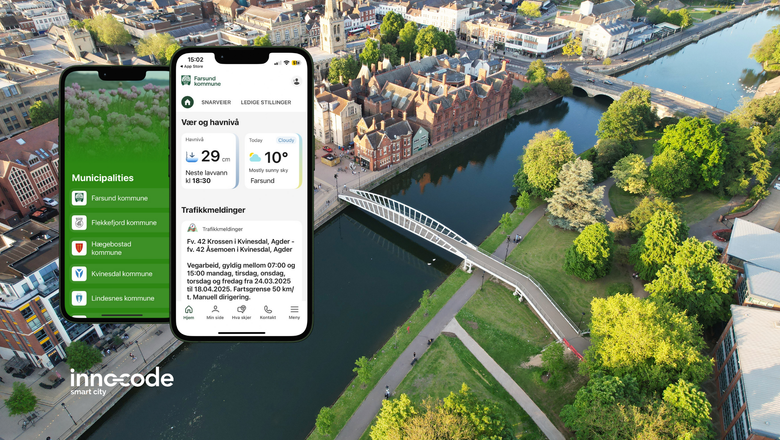

One shared interface for local life
Local information is typically fragmented across many channels: municipal websites, social media pages, service portals, and individual organisations’ platforms. Each reaches parts of the community, but rarely the whole.
A citizen app aggregates content from existing local channels into one shared interface. Residents receive a personalised local feed based on geography and interests, while municipalities gain a unified outbound channel they fully control.
Communication as preparedness infrastructure
Communication is not just information – it is preparedness.
During disruptions or emergencies, municipalities need to reach residents quickly and reliably. Push notifications from an owned app reach people instantly, without dependency on algorithms, paid visibility, or platform policies.
In Västerås, the municipal app reached over 25,000 downloads in its first year, creating a direct channel to a large part of the population. This level of reach makes the app a practical complement to traditional emergency and service communication.
Efficiency, cost control, and operational impact
Smart city initiatives are expected to improve efficiency, not add complexity.
In Farsund, proactive outbound communication through push notifications led to a 30% reduction in contact centre calls. When residents receive timely updates on reported issues, fewer follow-up calls are needed and duplicate reporting decreases.
Over time, a city-owned channel can also reduce reliance on paid communication in social media, local press, and other external channels.
Digital sovereignty and public trust
More local governments are questioning whether commercial social platforms should be central to public communication.
Issues around data integrity, moderation, ethics, and long-term dependency are increasingly part of smart city and resilience strategies. Public information is now widely recognised as critical infrastructure – something municipalities should control themselves.
In District of Frogner (City of Oslo, Norway), the district council made a deliberate decision to reduce dependency on Meta by establishing a direct channel to residents through its own app. The guiding principle was clear: public sector communication should not rely on commercial platforms.
Daily usefulness builds resilience
The most effective citizen apps are not only used in crises – they are useful in everyday life.
In Södertälje, real-time data such as traffic conditions, bridge openings, and parking availability make the app part of daily routines. Daily relevance creates habit. Habit creates trust. And trust is what makes communication effective when it matters most.
A channel that cities control themselves
Citizen apps are not about replacing websites or social media. They are about creating a city-owned digital layer for communication, coordination, and community engagement.
In that sense, a citizen app is not just a channel – it is foundational infrastructure.